

Data Modernization · Engineering · 19 min
Data Warehouse Modernization: From Stored Procedures and Database Views to dbt, CI/CD and Governed Models
How to evolve a warehouse that works but is hard to change into a version-controlled, tested and governed platform—without a risky rewrite.

Direct answer
What is data warehouse modernization?
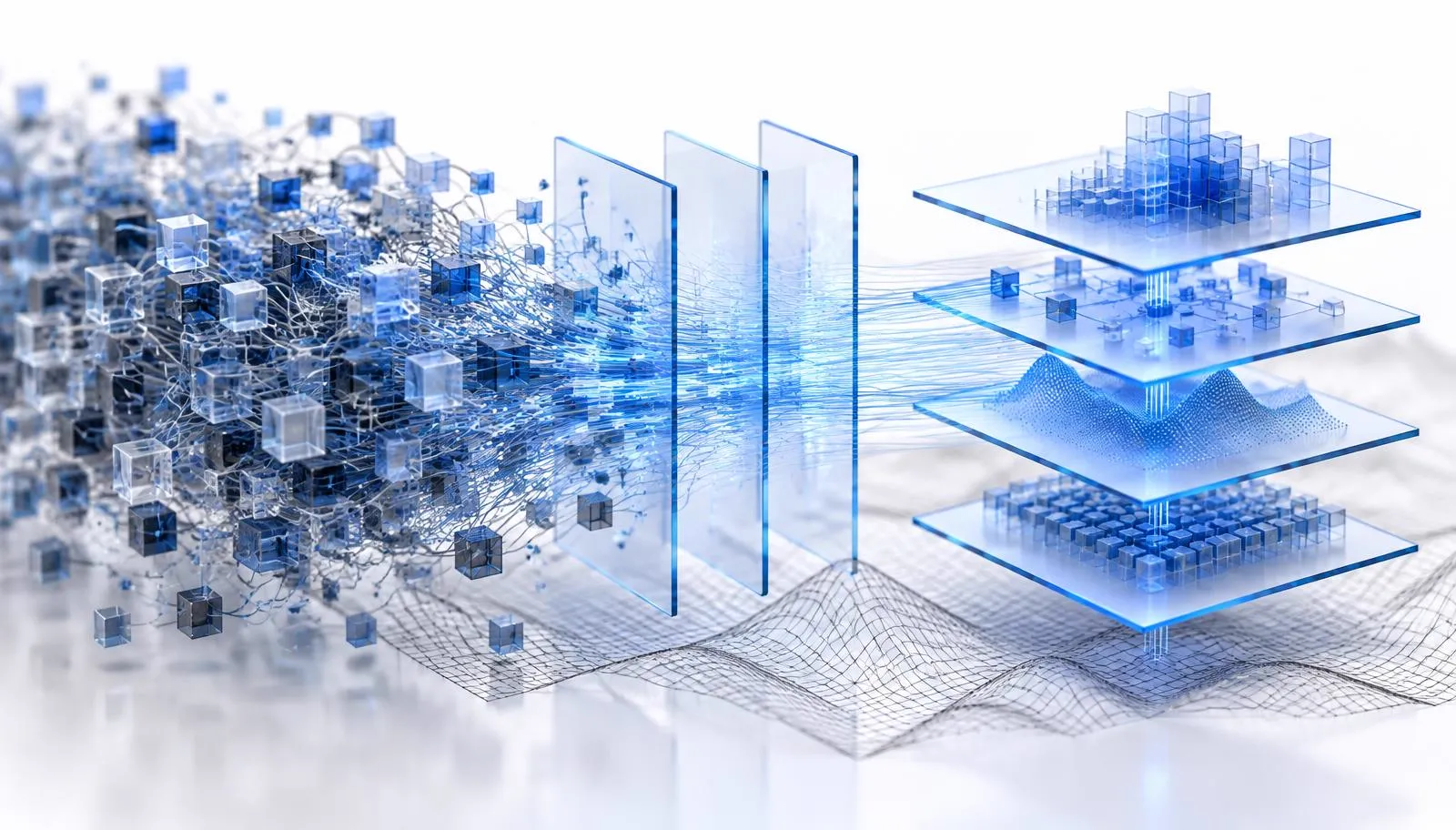
Data warehouse modernization does not necessarily mean replacing the entire warehouse. It can involve progressively moving transformation logic into maintainable models, introducing source control and automated deployment, improving testing and lineage, retiring obsolete database objects, and strengthening monitoring around incremental loads and backfills. The safest approach is usually staged rather than a large rewrite, with each change validated against existing outputs before consumers move.
Key takeaways
- Modernization does not always require platform replacement.
- Transformation logic is often the first maintainability problem.
- Source control changes how data-platform work is governed.
- CI/CD should include validation, not merely deployment.
- Incremental loads and backfills require deliberate testing.
- Obsolete objects should be retired carefully.
What makes a data warehouse 'legacy'?
Not its age. A warehouse becomes legacy when it is hard to understand, test and change safely—regardless of whether it runs on a modern cloud platform.
A three-year-old cloud warehouse can be more fragile than a ten-year-old on-premises one if its logic grew without structure. The useful signals are operational, not chronological.
- Transformation chains that are difficult to follow from source to report
- Stored procedures carrying extensive business logic
- Manual deployment by running scripts in production
- Undocumented dependencies between views, procedures and jobs
- Fragile incremental jobs that need manual reruns
- Environment changes applied inconsistently across dev, test and production
- Obsolete database objects nobody is confident enough to remove
- Testing that is difficult or does not happen
Do you need to replace a legacy data warehouse?
Not necessarily. The constraint is often in how transformation and change are managed, not in the platform itself. Choose the smallest path that removes the real constraint.
The same reasoning applies to operational applications; see Modernize or replace? for the broader decision framework.
| Path | Fits when | Watch out for |
|---|---|---|
| Improve the existing warehouse | The platform is adequate; problems are in logic, testing or deployment | Treating symptoms without introducing structure |
| Modernize transformation | Business logic is buried in procedures and views | Rewriting everything at once instead of domain by domain |
| Migrate platform | The platform limits scale, cost, support or capability | Migrating technical debt unchanged to a new platform |
| Hybrid transition | Risk requires old and new to run in parallel | Prolonged dual running and reconciliation effort |
| Rebuild selected domains | Specific areas are beyond repair; others are healthy | Inconsistent definitions between rebuilt and legacy domains |
The Data Warehouse Modernization Ladder
Xyncwave's ladder sequences modernization into six stages. Each stage reduces risk for the next; skipping stages usually moves risk rather than removing it.
1 — Inventory
Understand existing views, procedures, tasks, dependencies and pipelines—what runs, when, and what depends on it.
2 — Stabilize
Resolve obvious reliability issues before migration: failing jobs, known data defects, undocumented manual fixes. Migrating an unstable process preserves the instability.
3 — Modularize
Move suitable transformation logic into smaller, maintainable models with clear inputs and outputs.
4 — Version
Introduce source control and structured change management for models, schema changes and configuration.
5 — Automate
Add CI/CD and environment-based deployment so changes are built, tested and promoted consistently.
6 — Govern
Establish testing, monitoring, documentation and ownership as ongoing operating practice.
Start with dependency discovery
Before changing any object, map what feeds it and what depends on it. In warehouses, the most damaging failures happen downstream of the change, often days later.
A typical dependency path runs: sources → ingestion → staging → views → procedures → scheduled tasks or jobs → reporting models → dashboards and applications. A view that looks unused may feed a procedure that runs monthly; a column rename may break an extract consumed by a partner. Dependency discovery combines system metadata, query history, job schedules and conversations with report owners, because not every consumer is visible in the database.
The output is a map ranked by criticality: which objects serve finance close, regulatory reporting or customer-facing applications, and which are genuinely peripheral. That ranking decides where modernization starts—and where it should be most cautious.
Should stored procedures be migrated to dbt?
Some should, some should not. Stored procedures are not inherently bad; they become a problem when they hold large amounts of transformation logic that is monolithic, hard to test, weakly versioned or unclearly owned.
A thousand-line procedure that stages, joins, applies rules and writes several tables in sequence is difficult to review and nearly impossible to test in parts. A modular approach splits that work into separate models—each a single SELECT with explicit dependencies—so each step can be tested, documented and changed independently. dbt is a common framework for this: it builds models in dependency order, runs tests between them and records lineage.
Procedures that perform procedural or administrative work—permission management, operational utilities, complex control flow—may be better left as procedures under source control. The goal is maintainable transformation, not the elimination of a language feature.
Moving database views into dbt models
Treat each migration as a controlled replacement: reproduce the logic, prove equivalence, then move consumers. Retire the legacy object only after confidence is established.
Comparison should cover row counts, key totals and a sample of row-level differences. Any difference must be explained—sometimes it reveals a long-standing defect in the original, which then becomes a business decision rather than a technical one.
A safe migration pattern
Each step produces evidence the next step relies on.
- 1. Select the existing view and understand its dependencies
- 2. Reproduce its logic as a model
- 3. Validate the output against the original
- 4. Convert and materialize it appropriately (view, table or incremental)
- 5. Compare results over representative periods
- 6. Migrate consumers where appropriate
- 7. Retire the legacy object only after confidence
Source control changes the operating model
Once warehouse code lives in Git, every change has an author, a reason, a review and a history. Data-platform delivery starts to behave like software engineering.
Branching lets engineers work on changes without affecting production. Pull requests make changes visible and reviewable before merge. Code review catches logic errors and enforces conventions. Version history makes it possible to see exactly what changed when a number moves. Controlled merges ensure only reviewed code reaches deployment.
This also applies to schema changes, not just transformations. Tools such as schemachange apply versioned migration scripts to Snowflake in a defined order, so database structure is managed in the same controlled way as model code.
What does CI/CD mean for data engineering?
CI/CD automates how data-platform changes are built, tested and promoted between environments. For data, deployment without validation is not enough—the pipeline must prove the data is still correct.
- Code: models, scripts and configuration built from source control
- Environment configuration: separate dev, test and production targets
- Validation: tests run against built models before promotion
- Controlled promotion: approvals and gates between environments
- Logs: a record of what was deployed, when and by whom
- Rollback or recovery strategy where feasible—data changes are not always reversible, so plan recovery explicitly
The Data Change Safety Gate
Xyncwave's Safety Gate is seven questions every production data-platform change should answer before it is promoted. Use the checklist below with your next change.
Interactive checklist
0 of 7 answered
If any question has no clear answer, the change is not yet ready for production.
How should incremental loads be tested?
Incremental loads process only new or changed data, which makes them efficient—and makes their failures quiet. Test them against the edge cases, not the normal day.
In dbt, incremental models use a unique key and filter logic to merge new data, and can be rebuilt with a full refresh when needed. That full-refresh path should itself be tested before you depend on it.
Watermarks and change data capture
A watermark (such as a last-updated timestamp) tells a job where the previous run stopped. Change data capture reads changes from the source's log where appropriate. Both depend on the source recording changes reliably; a source that updates rows without changing the timestamp will silently defeat a watermark.
Failure modes to test deliberately
Build test cases for each of these rather than waiting for production to reveal them.
- Duplicate landing data from retries or re-sent files
- Missed records at watermark boundaries
- Late-arriving data that belongs to an earlier period
- Reseeding after a source is reloaded
- Replay of a failed window
- Backfill after a logic change
What is a data backfill?
A backfill recalculates historical data—typically because a schema or business rule changed and existing records must reflect the new logic. It is part of modernization, not an afterthought.
- Scope: which tables, periods and consumers are affected
- Validation: expected before-and-after differences, agreed in advance
- Controlled execution: in batches, outside critical reporting windows
- Monitoring: run progress, failures, compute consumption
- Reconciliation: confirm totals against source and explain every change
Retiring obsolete database objects
Do not delete something because it appears unused. Prove it is unused, then retire it in stages.
Check dependencies in metadata, scheduled jobs and tasks, reports and extracts, hidden consumers such as analysts' saved queries, and external integrations. A cautious pattern is to revoke access or rename first, observe for a defined period, and only then drop—keeping the definition in source control so it can be restored.
What this looks like in practice
Xyncwave's published Snowflake data warehouse modernization case study covers this ladder in a delivery context: Snowflake migration scripts, database views and stored-procedure management, view-to-dbt conversion, SchemaChange versioning, Azure DevOps environment-based deployment, backfill validation, incremental-load investigation, ETL troubleshooting, and retirement of obsolete database objects and tasks where appropriate.
The case study documents the scope of engineering activity. It does not claim performance improvements, cost savings or other quantified outcomes.
For reporting environments where the challenge is tracing business logic through SQL, views and stored procedures into report definitions, see the enterprise reporting and data accuracy case study.
Modernization does not end with deployment
The final rung—govern—is permanent. Without operating practice, a modernized warehouse drifts back toward the problems it replaced.
For the broader context of which layers a data platform needs, or how to build a reliable foundation from scratch, see the other two articles in this series.
- Monitoring of freshness, failures and test outcomes
- Data-quality rules maintained as business rules change
- Documentation generated from and kept alongside code
- Operational ownership for each domain and critical model
- Incident handling: who is alerted, how issues are triaged and communicated
Interactive planning tool
Data Warehouse Modernization Assessment
Eleven questions about how your warehouse is built, changed and operated. The result suggests where modernization should start.
Where does your warehouse run?
Buyer questions
Frequently asked questions
Evidence register
Research & Sources
- 01dbt Labs Documentation, 2026: What is dbt?
Official overview of dbt as a SQL-first transformation workflow with version control, testing and documentation. Accessed September 2026.
- 02dbt Labs Documentation, 2026: Configure incremental models
Official guidance on incremental materializations, unique keys and full-refresh behaviour. Accessed September 2026.
- 03dbt Labs Documentation, 2026: Add data tests to your DAG
Official reference for generic and singular data tests such as unique, not_null, accepted_values and relationships. Accessed September 2026.
- 04Snowflake Labs (GitHub), 2026: schemachange
Open-source, community-maintained database change management tool for Snowflake. Accessed September 2026.
- 05Microsoft Learn, 2026: Azure Pipelines documentation
Official documentation for build, test and deployment pipelines in Azure DevOps. Accessed September 2026.
- 06Snowflake Documentation, 2026: Key concepts and architecture
Official description of Snowflake's storage, compute (virtual warehouses) and cloud services layers. Accessed September 2026.
Modernize without losing control
Which part of your data warehouse is becoming hardest to change safely?
Start with dependencies, transformation logic, deployment and data-quality risk before choosing whether to refactor, migrate or replace.
Assess Your Data Warehouse